Product Designer
GymBag.
A curated fitness product-discovery experience — the trustworthy subscription box I founded, branded, and grew solo.
- Scope
- Brand, E-Commerce & Product Design
- Team
- Solo
- Duration
- 1 year
- Founded
- 2015
Finding great fitness products is not easy.
The industry is notorious for its shady advertising tactics and debatably effective products. I was shopping for something that solved this problem in my natural bodybuilding niche and couldn’t find anything close to what I wanted. So I started GymBag with the goal of creating a trustworthy product-discovery experience that gave bodybuilders something to look forward to each month.
I founded GymBag in 2015 to build a business — I never intended to become a designer. But with no budget to hire one, I taught myself brand, packaging, web design, and marketing as I went.
Rapid testing with concept photos.
As soon as I hatched the idea, I grabbed the nearest shoebox, filled it with fitness products, and sent pictures to 5–10 friends. Without giving any context, I asked what they thought. Some assumed it was a real product I’d purchased. The reactions were overwhelmingly positive and sufficiently validating: “That’s sweet, where did I get that?”
Crafting a strong brand without a proprietary product.
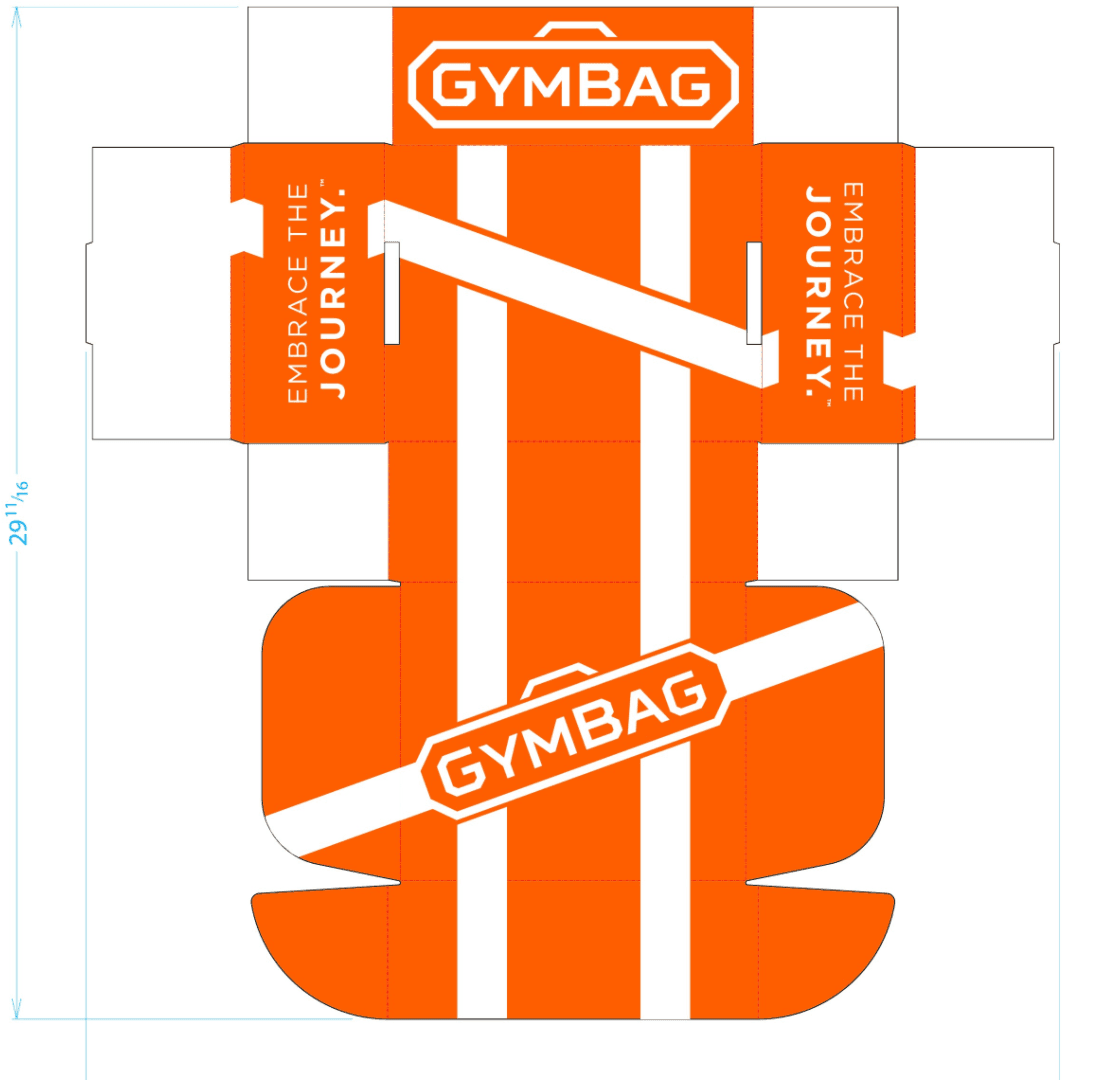
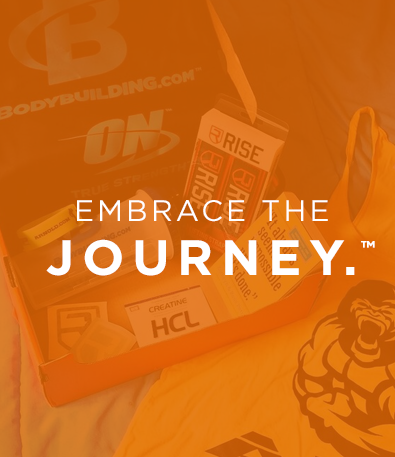
Without a proprietary product, brand was crucial to GymBag’s success — and I couldn’t afford to hire a designer, so I designed it myself. After testing fonts, colours, and taglines, I settled on a simple flat logo, a slightly blocky font, and a bold orange to communicate trust, athleticism, and sophistication. “Embrace The Journey” positively reinforced a difficult, endless, but worthwhile fitness journey — and nudged subscribers to stay.
Building trust through design.
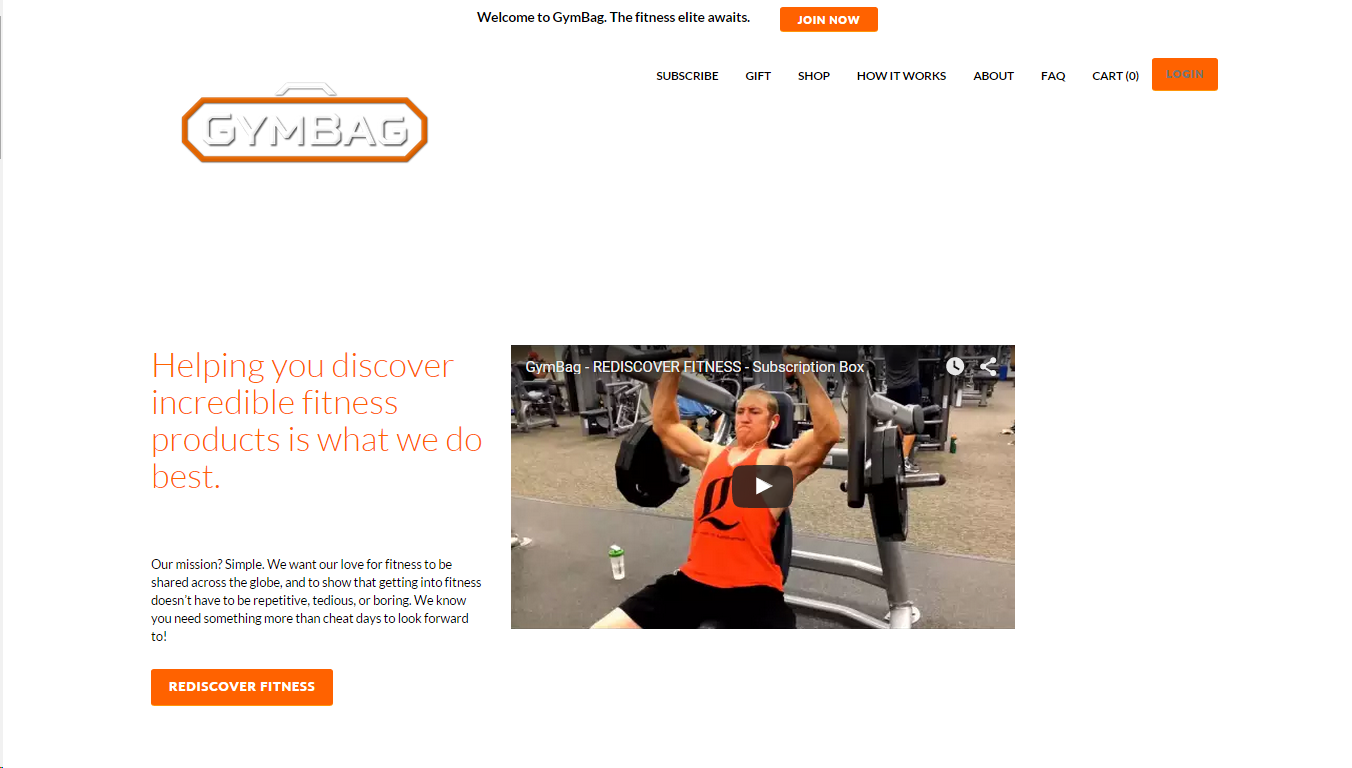
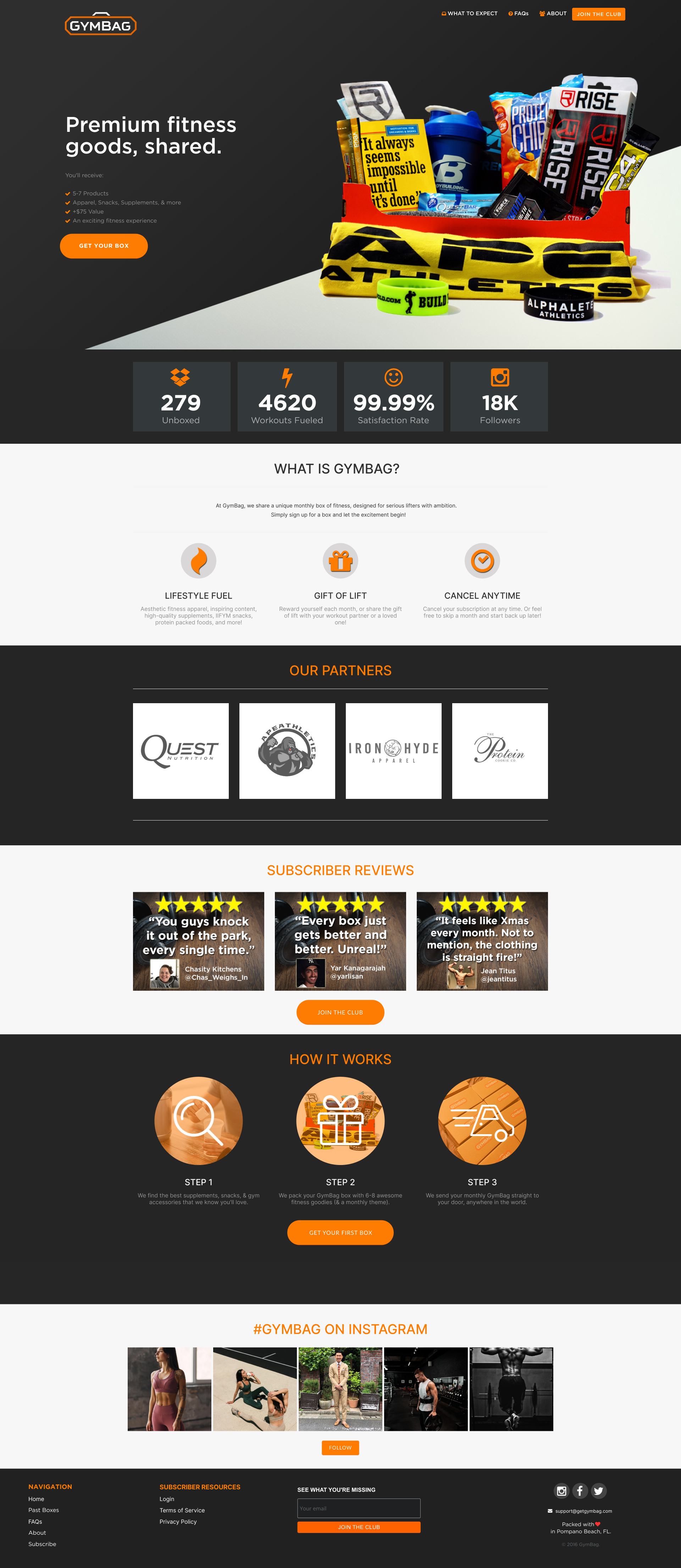
Selling online as a new business required a trustworthy website — especially since we wanted to be the trusted source for discovering great products in an often shady space. I launched on Cratejoy in 2015 (below left), the best subscription-box platform at the time, but it offered only rigid templates and no drag-and-drop designer.
With a specific creative vision in mind, I learned HTML/CSS as I went — breaking a lot along the way — and improved the design enough to push conversions to 2.5%. That was substantial for a brand-new business with little social proof, especially as the highest-priced subscription in the niche running organic-only marketing.
A delightful, informative unboxing experience.
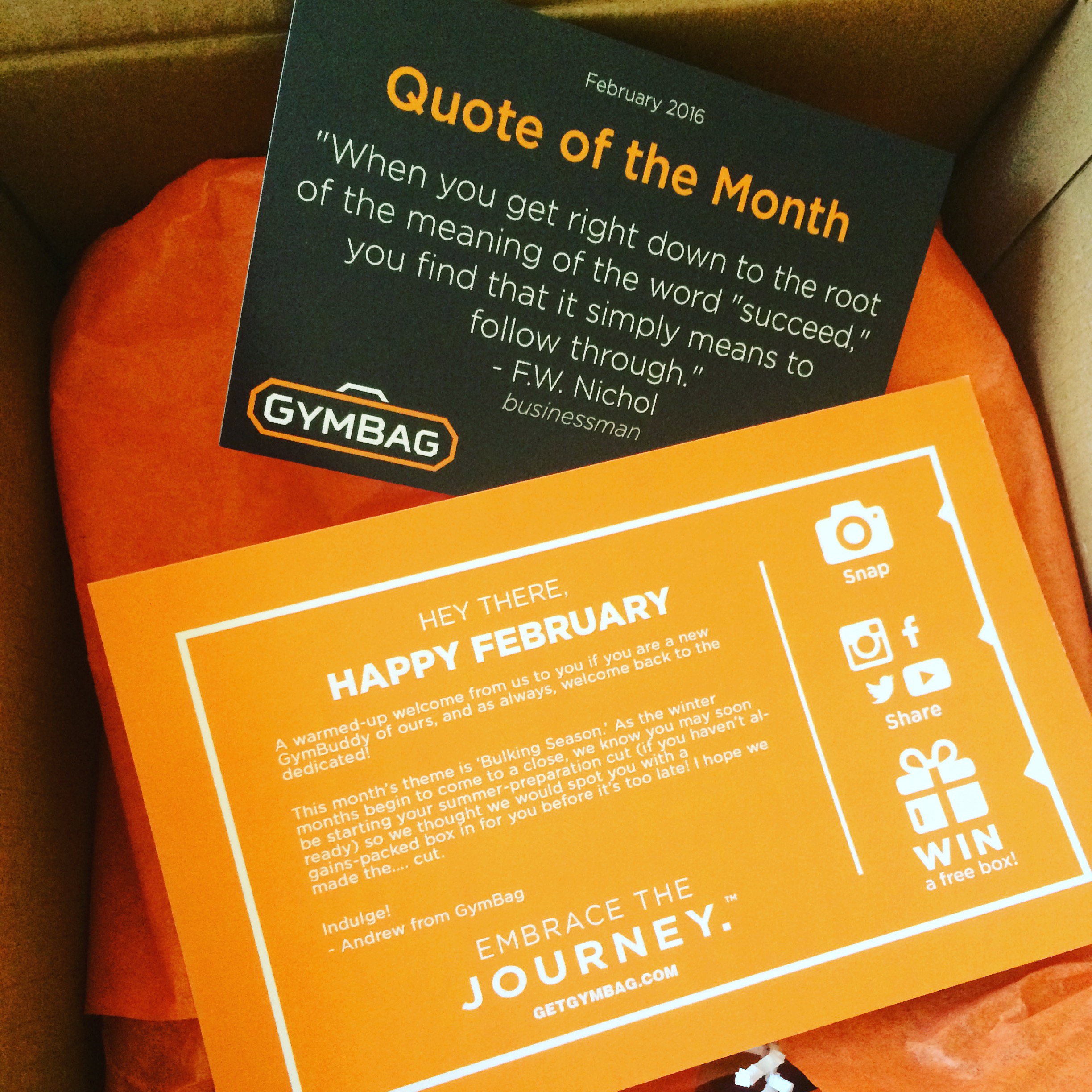
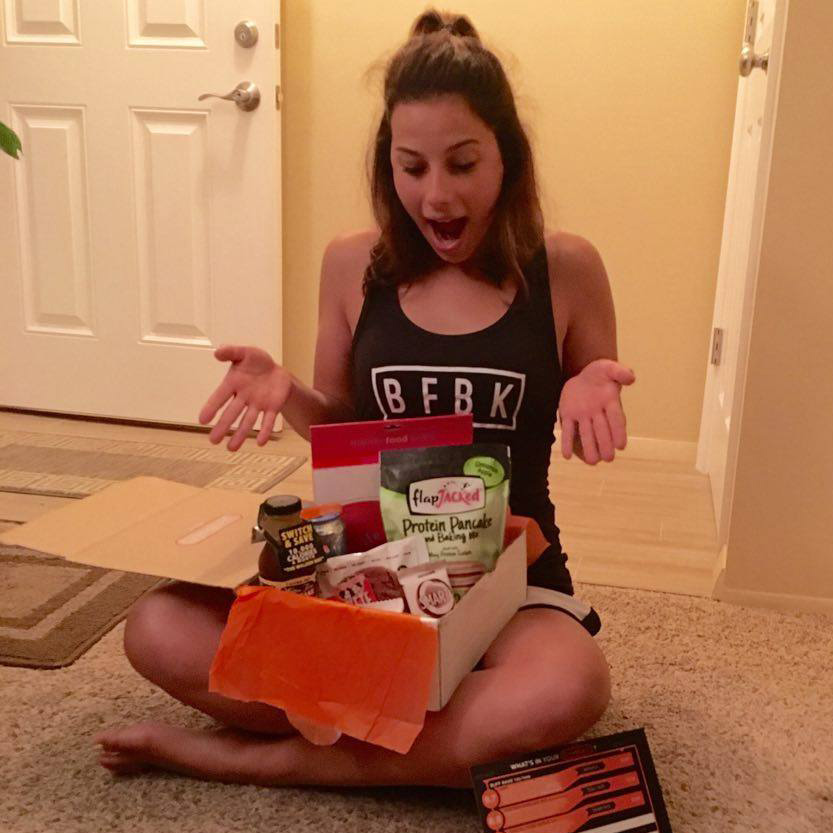
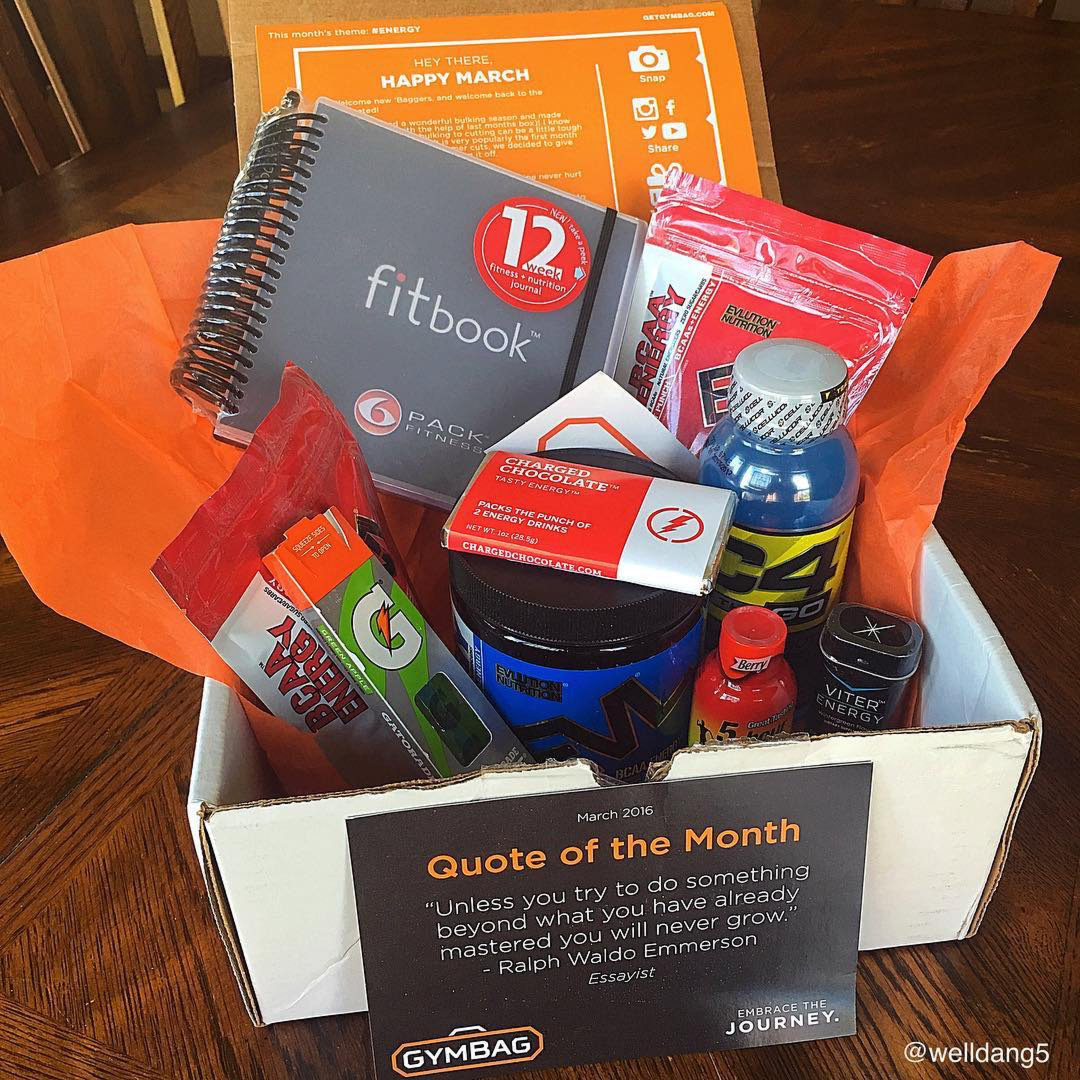
Aside from packaging, the unboxing experience was our main opportunity to turn a service into a product of its own. I created a memorable experience through insert cards. Each primary card included a note from the curator (me) describing the theme, information about each product, and a chance to win a free box by posting yourself with your box on social media — which developed a connection with subscribers over time, grew the brand by leveraging customers’ social networks, and painted GymBag as a marketing opportunity to other brands, lowering our cost of goods.
Reaching the fitness community with no budget.
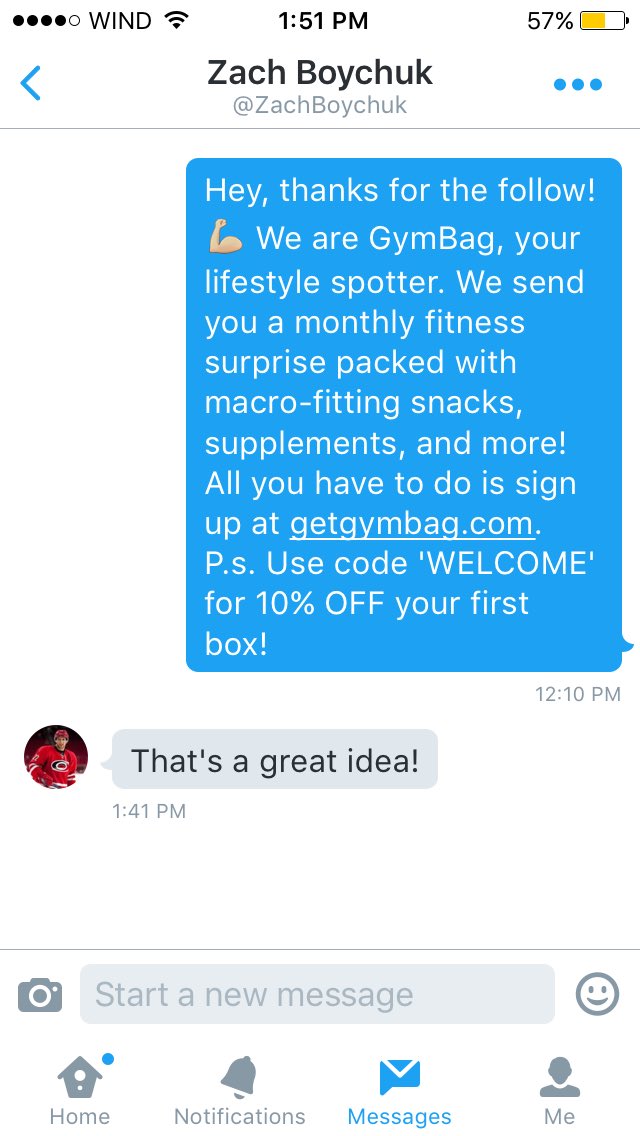
At the time, fitness enthusiasts were on Instagram and YouTube, and brands like Gymshark were new and growing explosively. As one guy with no budget, YouTube seemed an inefficient use of my time (post-Vine, pre-TikTok), so I focused on growing our Instagram organically and repurposed that creative for emails, influencer posts, and more. I also leveraged sunk costs on leftover boxes, sending them free to influencers and bloggers for exposure and backlinks.
Sold $30,000 to 250+ happy customers worldwide.
Working solo with no budget, GymBag grew a real community and earned the support of industry-leading partners — even drawing a cease and desist from the #1 brand in the niche for marketing concept photos too well, and encouragement from Noah Kagan (CEO of Sumo, #30 at Facebook) to keep at it rather than take a job.
Supported by industry-leading partners


An intensive learning experience.
Solve a problem you care deeply about. My thinking was simple: I’m interested in fitness and business and I’d found a gap in the market. The missing piece was a strong personal connection to the problem. The valleys of a startup aren’t for the faint of heart, so pick a problem motivating enough to keep you working at max capacity through the toughest times.
Ideas are worthless on their own. Whether or not you have the right idea up front, building it is 99% of the challenge. Through trial and error your solution morphs into something alien to your initial ideas anyway. Start with a high-level vision, take the leap, and figure much of it out along the way.
Be customer-focused. Being a fitness person, I connected naturally with my customers, so talking to them and meeting their needs came easily. Solving problems for people you connect with is intrinsically rewarding, and a genuine desire to serve them always yields a better product.